

 REQUEST INVITE
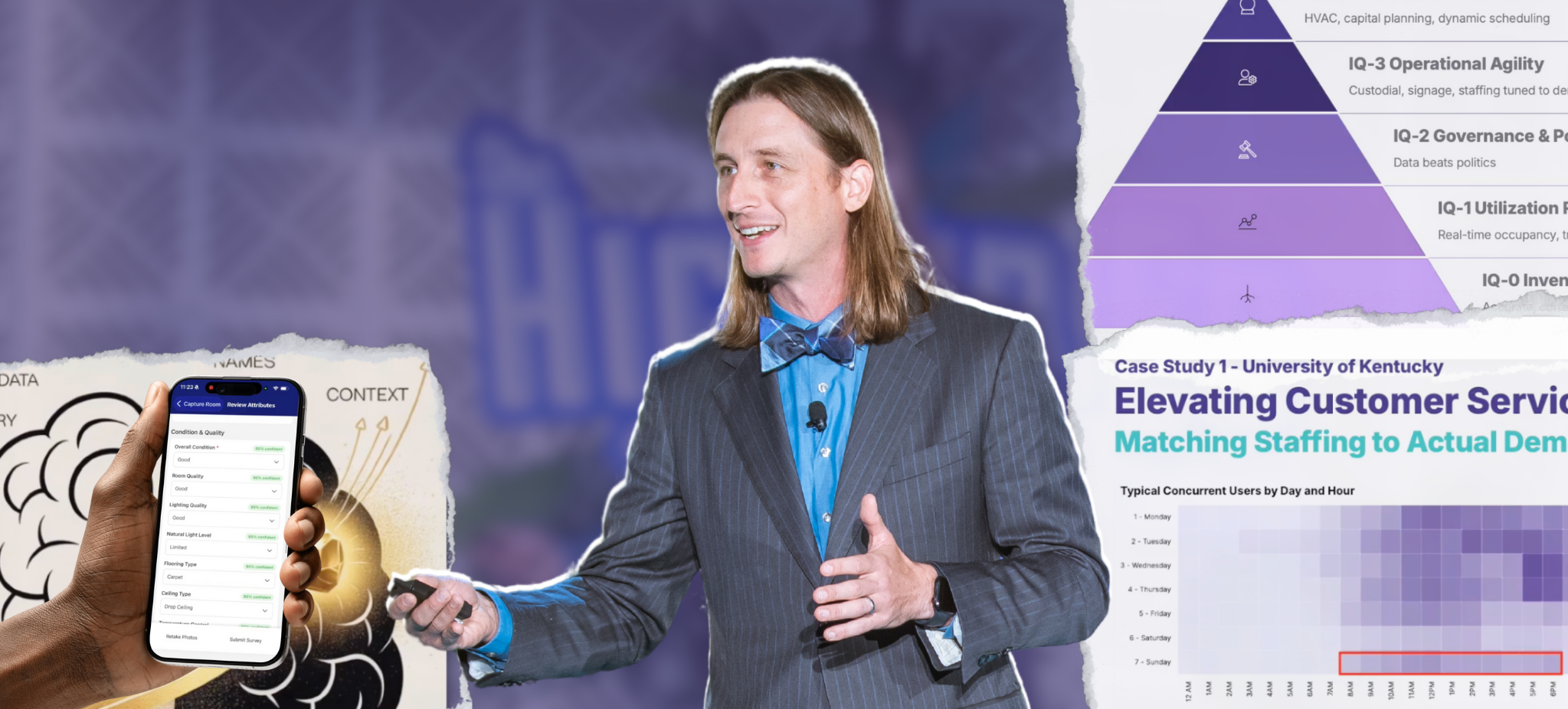
Aaron Benz stood watching his son dig through murky water in Durango, searching for specks of gold mixed in with rocks and silt. It struck him: this is what facilities leaders do every day.
You're sifting through data: space inventories, utilization reports, maintenance records, looking for the insights that actually matter.
The data exists. The gold is in there. But without context, it's just rocks.
At HEFF, Benz, founder of CampusIQ, walked through three case studies showing what happens when you add context to data campuses already own — and how that shift can change major decisions around space, capital planning, and operations.
The risk wasn’t spending too little. It was spending big without understanding how space actually works.
What "Context" Actually Means
Data tells you what exists. Context tells you what it means.
Facilities teams already track inventories, condition assessments, schedules, and usage. What's often missing is how those pieces connect when a real decision is on the table.
Context is the layer that helps answer harder questions:
Is this space failing, or is it simply mismatched to how it's being used?
Are we planning new construction to meet demand, or compensating for invisible underuse elsewhere?
Do operating schedules reflect how buildings function today, or assumptions that haven't been revisited in years?
The breakthrough wasn't collecting more data. It was understanding what existing data meant when decisions like build, lease, or reconfigure were actually on the line.
University of Kentucky: When Schedules Don't Match Reality
At the University of Kentucky, custodial operations in the library and student center were built around long-standing assumptions about usage. By aligning cleaning schedules with actual restroom utilization patterns, the university achieved a 30% improvement in custodial efficiency while increasing satisfaction scores from the high 90s to 99%.
The same disconnect appeared in other services. The campus media depot operated Monday through Friday, a schedule set during COVID and never revisited. Utilization data showed Sunday demand matched Friday levels. As a result, roughly one in ten students seeking weekend service found no one available.
Context also reshaped capital planning. For a hospital expansion that required demolition of existing buildings, early plans called for 7% more square footage than currently existed. Occupancy data showed only a 2% increase was needed, a difference that translated into millions in avoided capital costs and hundreds of thousands in annual operating expenses.
The issue wasn't lack of planning. It was planning without evidence of how space was actually being used.
University of Central Florida: When Buildings Hide in Plain Sight
At the University of Central Florida, utilization analysis revealed that the Global Center, a 12-year-old building in the center of campus, was significantly underused.
By relocating international student services to a single floor in another building and refurbishing the Global Center at roughly $65 per square foot, UCF eliminated the need for a planned $104 million new academic facility.
The university also analyzed 550,000 square feet of leased classroom space. By moving courses back into underutilized campus buildings, UCF freed up approximately $5 million in annual lease costs.
One of the most telling findings: departmental classrooms showed the lowest utilization rates campus-wide, often used only a few times per year for testing, even as the university paid year-round for off-campus leased space.
Without context, those classrooms looked fine. With context, they became part of the solution.
UT San Antonio: When Usage Doesn't Match Design
At UT San Antonio, requests for additional office space came with a familiar price point: roughly $1,000 per square foot to build or $3 million annually to lease.
Before committing, the university measured actual office utilization. The average fill rate was 39%. Even at peak demand, when everyone who used offices throughout the year showed up at once, utilization reached only 62%.
The issue wasn't quantity. It was design. Traditional private offices sat empty while staff needed hoteling and shared workspaces that better reflected how they actually worked across campus.
UT San Antonio also put students to work as "Watt Watchers," cross-referencing building hours with occupancy. By adjusting HVAC setpoints in seven buildings to match when people were actually present, the university saved more than $100,000 in three months, with projected annual savings of roughly $500,000.
From Static Systems to Adaptive Ones
Benz framed these examples around a broader shift facilities leaders are navigating: moving from reliable but static systems to adaptive ones.
Static systems rely on fixed schedules, long-standing assumptions, and buildings designed once and operated the same way for decades.
Adaptive systems flex with real demand. Capital decisions are informed by actual usage. Operations adjust based on how space truly functions over time.
The shift isn't about technology. It's about replacing assumptions with evidence so capital, space, and operational decisions hold up when budgets don't.
Because when budgets tighten and enrollment patterns shift, the campuses that succeed aren't the ones with the most data. They're the ones who understand what their data actually means and act on it before the next decision becomes a crisis.
Watch Aaron’s full talk from HEFF here 👇

Posted by
Join us at HEFF!
An interactive retreat for facilities leaders at the nation's top colleges and universities.
Nov 8-10, 2026 | San Antonio, TX
Learn More


-May-04-2026-11-19-05-8005-AM.png)
-1.png)



Comments