“We’re living in a world that’s volatile, uncertain, complex, and ambiguous. That’s not a prediction. That’s right now.”
Bryan Alexander opened his talk showing why enrollment pressure, budget constraints, and institutional challenges are no longer happening in isolation. These pressures are amplifying each other.
A higher education futurist and author, Alexander runs the Future of Higher Education Observatory, where he shares ongoing research on higher ed’s biggest shifts. At HEFF, he connected demographic decline, political pressure, and AI disruption into what he called a polycrisis: crisis after crisis intersecting and compounding.
Why These Pressures Are Showing Up All at Once
Alexander laid out how these pressures are stacking up.
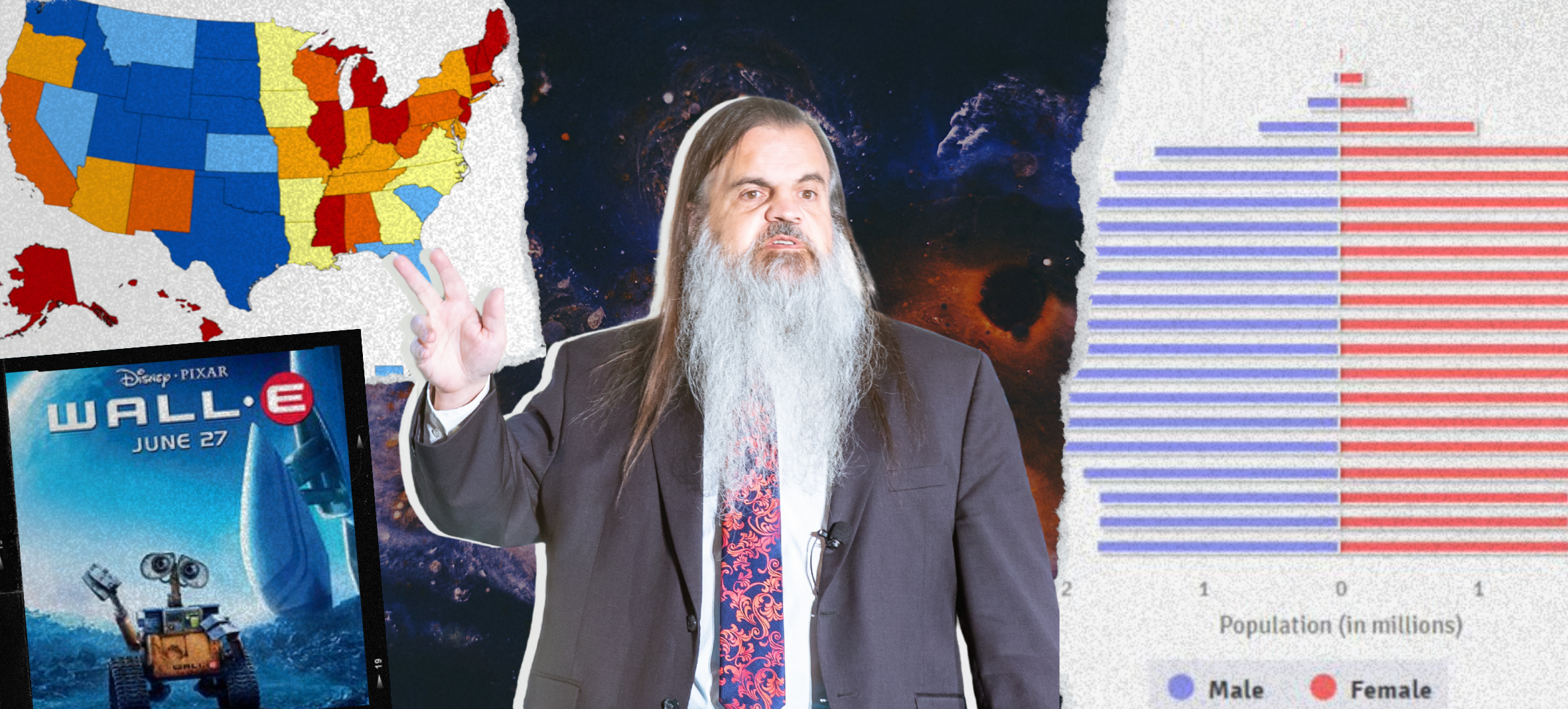
The enrollment pipeline is shrinking. The Northeast, Midwest, and much of the South are producing fewer children. Growth is concentrated in a narrow band, primarily in Texas through parts of the Midwest.
At the same time, students are choosing different paths. Degrees in computer science are up more than 130 percent. Nursing, engineering, and allied health programs are up 50 to 75 percent. Humanities degrees are down nearly 40 percent. That shift creates real strain for campuses trying to support high-density STEM and allied health programs inside buildings designed for different educational models.
Tighter enrollment leads to tighter budgets. Alexander pointed to political pressure as another factor that campuses are navigating simultaneously. Meanwhile, costs continue to rise. This year, two Boston colleges crossed the $100,000-per-year mark.
AI Changes the Conversation
Then AI enters the picture, not as another technology to manage, but as a challenge to long-standing assumptions about teaching, learning, and assessment.
Alexander pointed out that no one has the business model figured out. OpenAI is losing tens of billions annually, yet AI remains essentially free to users. Tools designed to detect AI-generated work do not work. “Absolutely terrible and worse than terrible,” Alexander said, warning that they can hurt people’s careers.
Rethinking assessment at that scale requires time and resources most institutions do not currently have.
One framework Alexander shared is what he calls “starship and cloister.” Some spaces provide full access to AI and advanced technology. Others are intentionally non-AI environments focused on live performance, discussion, and human evaluation. Even this approach, he noted, requires campuses to rethink how learning environments function.
Two Possible Directions
Alexander closed by outlining two possible futures, without predicting which one will prevail.
In one, higher education becomes more valuable than AI because people seek what is human and trustworthy.
In the other, AI is “good enough.” It is fast, inexpensive, and always available. Higher education, by comparison, looks expensive and slow to adapt.
The point was not choosing a winner. It was recognizing that these forces are already converging, and campuses are being asked to respond to all of them at once.
Watch Bryan’s full talk here 👇🏻

 REQUEST INVITE






-May-04-2026-11-19-05-8005-AM.png)
-1.png)
Comments